
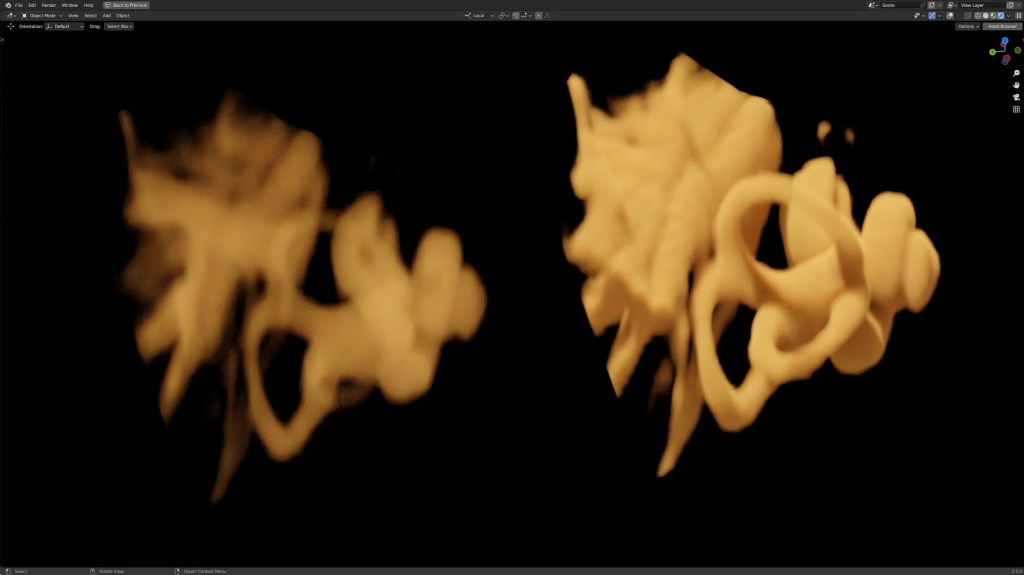
Context
Due to suffering from chronic BPPV, I have to interpret and correct many episodes every year. In doing so, I have made improvement to traditional manoeuvres, which assist in improving speeds for episode correction and recovery. In some cases, otoconia are very persistent, often adhering to positions that are difficult to resolve, sometimes presenting like cupulolithiasis when this may not be technically correct. An example of an episode from memory is a case of right ear posterior canal canalithiasis (the most common affected canal for me, possibly due to mild posterior canal dehiscence, which may allow additional vibration into the canal, disrupting otoconia embedded in utricle and saccule). In one episode, upper and right eye drift were presenting on right Semont and phase one right Epley manoeuvres (equivalent to right side Dix-Hallpike). Concluding Semont and Epley did not change the presentation, where they typically would from similar previous episodes. Repeated attempts were unsuccessful, leading to the conclusion of ‘trapped’ or ‘adhered’ otoconia, resistant to movement. The solution was a single use of my modified deep head hanging manoeuvre, as described below.
⚠️ Warning
Do not attempt this manoeuvre.
The steps are being recorded here for historical provenance and consideration of healthcare professionals in case it is deemed worthy of further investigation.
It is not safe for anyone at risk of stroke, aneurism, high blood pressure, bleeding disorders or any related risk.
Manoeuvre Steps
- On bed or suitably comfortable surface, lay back and hang head upside-down over the edge. Hold this position for ~30 seconds, extend timings as is felt appropriate.
- Rotate head either to the left or right while maintaining upside-down position, hold at this side angle for an additional 20 seconds.
- Rotate head to the opposite horizontal side angle (if starting with left, turn right or vice versa). Hold this new angle for an additional 20 seconds.
- Rotate head back to straight angle while still upside down, hold for ~20 seconds.
- Quickly bring the head up by tucking the chin to the chest, so that you are now facing the ceiling. Warning: this move may be extremely provocative due to the angular acceleration and may confuse your sense of gravity. If otoconia are provoking the inner ear, a fast manoeuvre from this angle may feel as though you are being thrown into the air. If possible, you may wish to grab the surface you are laying on for additional comfort.
- After discomfort has reduced, maintain this head position for ~30 seconds, however instead of ending the manoeuvre, return the head to an upside-down position and hold there for an additional 30 seconds. This is to give any otoconia released from the angular momentum a chance to reposition.
- You may optionally repeat left and right angles. When this time has concluded, slowly tuck your chin back to chest (a slower speed is appropriate, unlike the fast tucking from earlier). This slow tucking manoeuvre should be less provocative. You will be looking to the ceiling again. Hold this position for 30-60 seconds.
- Slowly sit back up so you are upright. Maintain this position for a few minutes, and let discomfort pass. Take the time to slowly move your head around randomly at shallow angles in any direction to give the brain some input to learn from while discouraging otoconia from immediately settling. Assess any nystagmus or drifting of the eyes to see whether there is a change.
 Curtis Holt - Studio / Lab